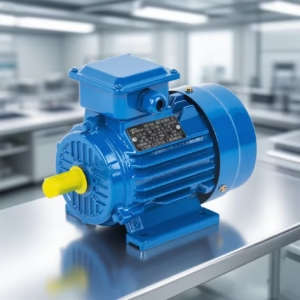
This condition is particularly dangerous because the motor may continue running while silently overheating and degrading internally. If not addressed quickly, it can lead to total motor failure.
In this guide, you’ll learn the real causes, clear symptoms, and practical solutions to phase loss so you can protect your equipment and avoid costly downtime.
What is Phase Loss in an Induction Motor?
Phase loss occurs when one of the three power supply phases becomes disconnected or inactive. Instead of receiving balanced three-phase power, the motor operates on only two phases.
This creates:
- Current imbalance
- Increased heating
- Reduced torque output
In many cases, the motor continues running, which makes the fault more dangerous than a complete shutdown.
Main Causes of Phase Loss
Understanding the root causes helps in both troubleshooting and prevention.
1. Blown Fuse in One Phase
A single blown fuse can disconnect one phase while the other two remain active. This is one of the most common causes in motor control panels.
2. Loose or Burnt Terminals
Loose connections increase resistance and heat, eventually causing the phase to open. Burnt terminals are a clear indicator of prolonged poor contact.
3. Faulty Contactor
Contactors with worn or damaged contacts may fail to close one phase properly, leading to partial power supply.
4. Damaged Power Cables
Cable faults due to:
- Mechanical damage
- Aging insulation
- Environmental exposure
can interrupt a phase completely.
5. Upstream Power Supply Issues
Transformer faults or distribution line problems can result in phase imbalance or complete phase loss from the grid.
Symptoms of Phase Loss in a Three-Phase Motor
Early detection is critical. Here are the most noticeable warning signs:
🔸 1. Excessive Heating
The remaining two phases carry more current often up to 1.7 times normal levels causing rapid temperature rise.
🔸 2. Reduced Motor Torque
The motor loses its ability to handle load effectively. You may notice:
- Sluggish operation
- Failure to start under load
- Sudden stalling
🔸 3. Unusual Noise and Vibration
A humming or buzzing sound is common due to the unbalanced magnetic field inside the motor.
🔸 4. Unequal Phase Currents
Using a clamp meter, you’ll observe:
- Two phases with high current
- One phase with little or no current
🔸 5. Frequent Tripping
Overload relays may trip repeatedly if properly configured, indicating abnormal current conditions.
Practical Solutions to Phase Loss
Immediate Actions (Troubleshooting)
If phase loss is suspected:
- Check all three-phase voltages
- Inspect and replace blown fuses
- Tighten all electrical connections
- Test contactor operation
- Measure current in each phase
